W-Sitting in Children – Myth and Truth
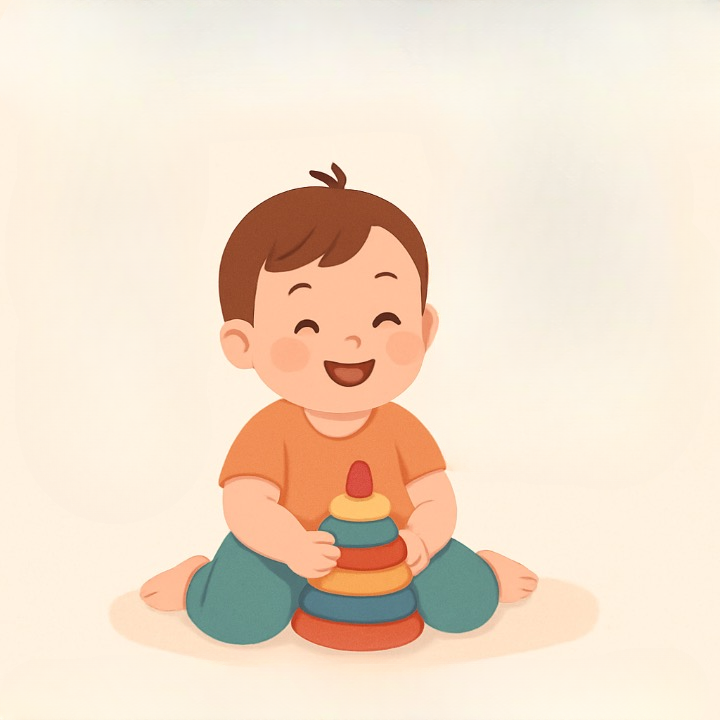
Scrolling through Facebook, I came across quite a few posts and videos “warning” about the dangers of W-sitting in children. What surprised me most was that many of these were shared by healthcare workers or people wearing white coats. Honestly, I was shocked, because… my own child often sits this way. Have you ever wondered, like I did: if W-sitting is really “harmful,” why do children naturally choose this position?
What is W-sitting?
The name says it all: when sitting, the child’s legs are spread out to the sides, forming the shape of a “W.”
What are common “myths” about W-sitting:
-
It easily causes hip dislocation.
-
It puts pressure on the knees, leading to muscle tightness and loose joints.
-
Over time, it may affect the child’s gait.
-
Parents should change thí position “immediately” before too late
So, what is the truth?
Those who share these concerns may not be intentionally fearmongering; their intention is often to warn the community. However, the problem is that many haven’t updated to the latest scientific evidence.
A systematic review published in January 2025 analyzed all existing studies on W-sitting in children. Findings showed:
-
Out of 3641 articles screened, only 7 studies qualified for analysis.
-
No scientific evidence was found linking W-sitting to harm in children. There was no association with developmental dysplasia of the hip (DDH).
-
Muscular activation was the same regardless of sitting position.
Conclusion: There is currently no scientific evidence to advise against W-sitting in children.
Moreover, International hip dysplasia Institute confirmed that W-sitting is a normal posture in children, has no association with hip dysplasia and should be allowed.
Why do children choose this position?
Because it is stable. With their legs forming a wide base, children don’t need to use much effort to balance. This allows them to focus fully on playing, building blocks, drawing, or exploring without worrying about falling over. For young children, this stability means more freedom for their hands and imagination.
When should parents be concerned?
W-sitting is only a concern if the child already has diagnosed musculoskeletal conditions or shows signs of pain, discomfort, or distress.
What should parents do?
If your child is otherwise healthy, treat W-sitting as just one of many natural posture children adopt. Encourage them to try different sitting and playing positions (cross-legged, kneeling, sitting on a chair, standing up and moving around) to promote flexibility. If your child only uses one position for long periods or shows pain or restricted movement, consult a doctor.
W-sitting isn’t as “scary” as many claim. Children are naturally smart, when they choose a position, it’s often their body’s way of finding comfort. The most important thing is that parents stay observant, supportive, and provide a safe, varied environment for their child’s movement and growth
Reference
-
Nordon DG, Passone C de GB, da Silva CAA, Grangeiro PM. W-SITTING IN CHILDHOOD: A SYSTEMATIC REVIEW. Acta Ortop Bras. 32(6):e279277.
-
W-Sitting and Hip Development - International Hip Dysplasia Institute [Internet]. 2019 [cited 2025 Aug 17]. Available from: https://hipdysplasia.org/w-sitting-and-hip-development/